The Missing Bricks Framework
A four-stage model that helps organizations identify structural gaps, strengthen leadership, and build cultures where people and communities can thrive.
The Core Idea: Organizations Are Not Broken. They Are Incomplete.
Many organizations are committed to creating cultures of trust, belonging, and inclusion. Yet even with strong intentions, meaningful change can feel slow or difficult to sustain.
Often the challenge is not resistance or lack of effort. Instead, the systems organizations rely on were built at a time when many voices and perspectives were not present in decision-making.
Over time these gaps create stress within the structure of an institution. Policies, leadership practices, and organizational norms may unintentionally leave out important perspectives and experiences.
These structural gaps are what we call Missing Bricks.
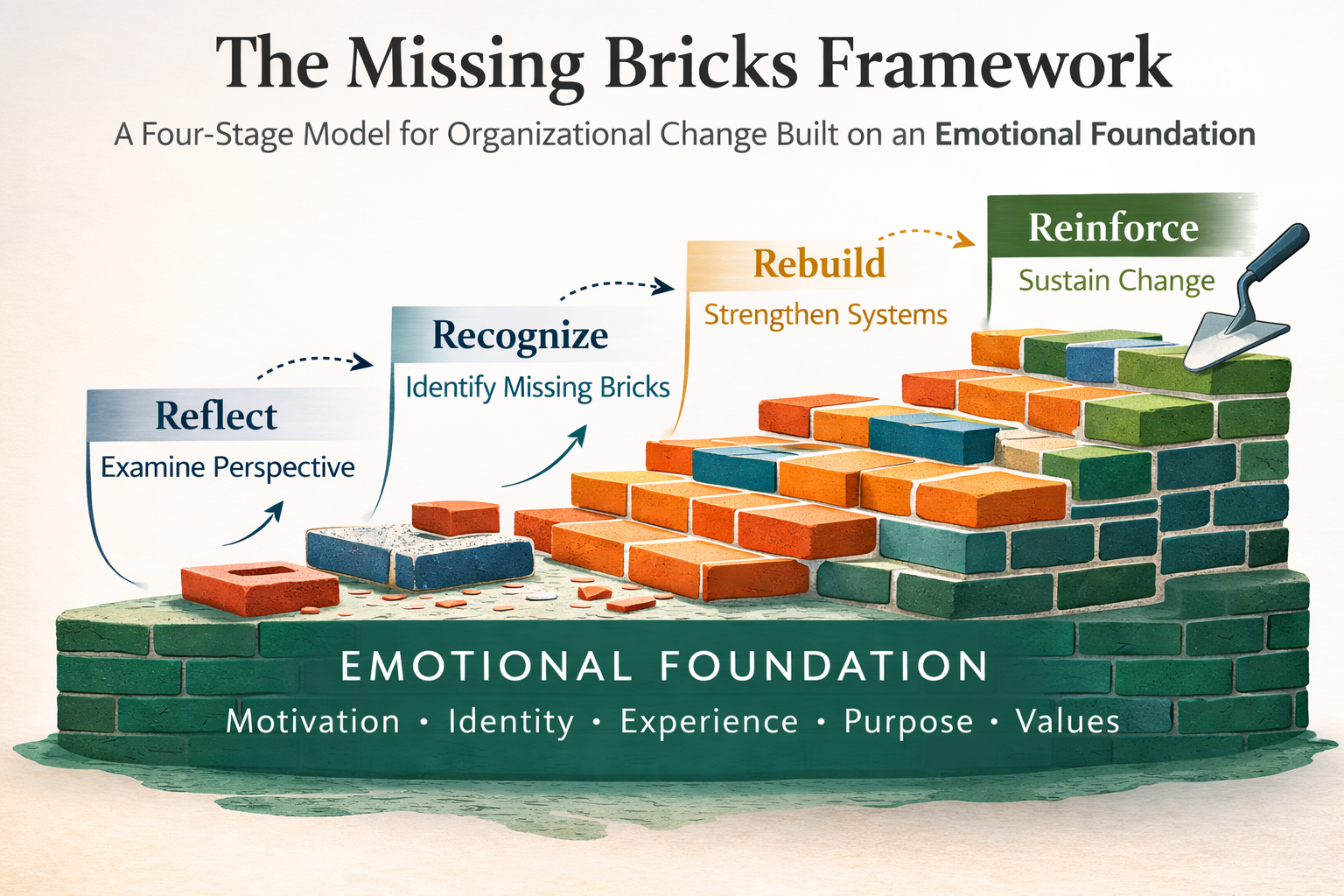
Reflect on Perspective
Organizations begin by examining the lenses and assumptions that shape how leaders understand their institution, their communities, and their role as decision makers.
Reflection helps uncover missing bricks that can limit progress and prevents organizations from fully recognizing structural gaps.
Recognize the Missing Bricks
Once leaders begin reflecting on perspective, they are better able to identify the missing bricks within the structure of their organization.
These gaps may exist in leadership practices, decision-making processes, policies, or relationships with the communities the organization serves.
Recognizing these gaps creates the foundation for meaningful change.
Rebuild the Structure
With greater clarity, organizations can begin rebuilding the systems and practices that shape their culture.
This stage focuses on strengthening leadership practices, policies, and decision-making processes so they reflect the experiences and strengths of the people and communities they serve.
The Deeper Layer of the Missing Bricks Framework
Reinforce the Foundation
Lasting change requires reinforcement.
Organizations develop structures that sustain accountability, support leadership development, and encourage continuous learning.
Reinforcing the foundation ensures that progress becomes part of the institution’s long-term culture rather than a temporary initiative.
Many models of organizational change focus on systems, policies, or behaviors. While these are important, they often overlook the deeper emotional forces that shape how individuals and institutions respond to change.
At the deepest level of any organization are the emotions that influence how people see themselves, their work, and their relationships with others. These emotions—hope, fear, exhaustion, pride, frustration—often shape how people respond to difficult conversations about culture, leadership, and equity.
The Missing Bricks Framework recognizes that meaningful change begins not only with systems, but with reflection on the motivations and experiences that shape how individuals engage with their work and their communities.
Why Organizations Struggle With Change
Many organizations approach equity and culture change through isolated initiatives or short-term programs. While these efforts may raise awareness, they often fail to address the deeper structural dynamics that shape institutional culture.
The Missing Bricks Framework focuses on leadership, systems, and relationships—the elements that influence how organizations operate over time.
Where the Missing Bricks Framework Comes From
The Missing Bricks Framework draws from more than two decades of experience working with community organizations, government institutions, and healthcare systems.
It is informed by research in leadership, cultural responsiveness, and organizational learning, as well as lived experience growing up in the Frogtown neighborhood of Saint Paul.
These experiences shaped a belief that meaningful institutional change happens when organizations build on their strengths while addressing the structural gaps that limit progress.
How Organizations Use the Framework
Organizations engage the Missing Bricks Framework through:
• leadership workshops
• organizational assessments
• strategic advising
• facilitated dialogue
Every organization has strengths to build upon. By identifying the missing bricks that often go unseen, leaders can rebuild stronger systems that support trust, collaboration, and long-term progress.